EVERYDAY CARE, YOUR WAY
How do you feel?
Find a little support for the moment you’re in.

Nausea & Travel Comfort
PC6 acupressure is a simple self-care option you can try when you feel mildly nauseated. For travel-related motion sickness, use it as an optional comfort practice — not as a proven treatment.

Sleep & Relaxation
Use gentle HT7 and Yintang acupressure as part of a short bedtime wind-down. Research has studied acupressure for sleep in several settings, but these PointWell routines are relaxation practices — not treatments for insomnia or other sleep disorders.
Desk & Body Tension
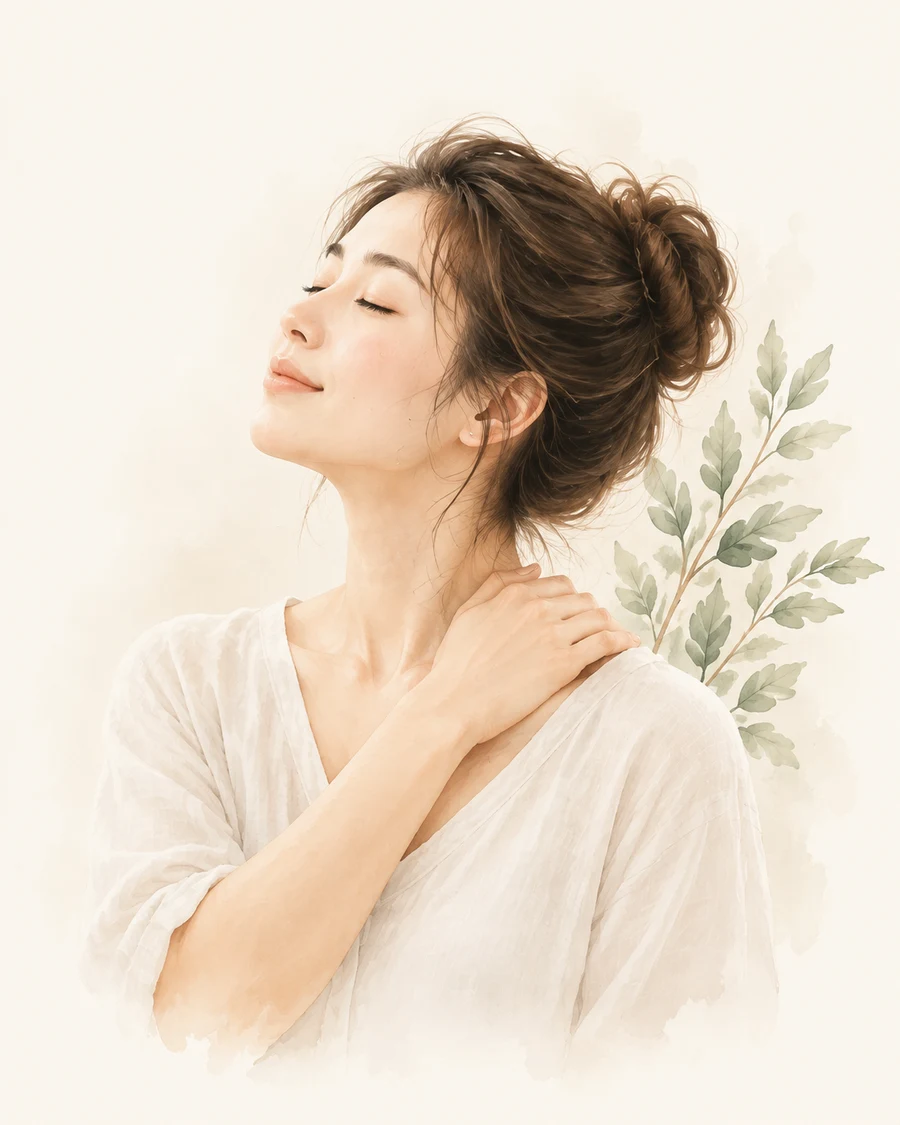
Use gentle GB20 and SI3 acupressure with simple shoulder and neck movement for familiar, mild tension after sitting or screen-heavy work. PointWell is a comfort practice, not a treatment for neck injury, nerve problems, or chronic neck pain.

After-Meal Comfort
Use gentle ST36 acupressure — with optional PC6 in the longer practice — when you want a quiet self-care pause after eating. These routines are designed for comfort, not to diagnose or treat indigestion, bloating, constipation, reflux, or other digestive conditions.

Calm & Stress
Use gentle Yintang or Yintang with HT7 as a brief centering practice when you want a quieter moment. Acupressure has been studied for situational anxiety in medical settings, but PointWell does not treat anxiety disorders or panic.

Feeling Drained
Try a short ST36 self-acupressure pause — or a longer version with a few minutes of light walking when walking feels safe. These practices are for familiar everyday tiredness, not persistent or unexplained fatigue.
Head & Face Tension
Use a short screen break, gentle brow-bone contact at BL2, and optional GB20 pressure at the base of the skull to create a few quieter minutes for your eyes, brow, and head. This is a comfort practice — not a treatment for headaches, migraine, dry eye, or vision problems.